

Mouth breathing in kids: what their open mouth at night is telling you
Answer five quick questions about your child's nights. We'll tell you what's likely behind it, whether it's worth a doctor's visit, and the one change you can make tonight.
Start the night check4.8 from 2,340 reviews90 nights to try LittleBear
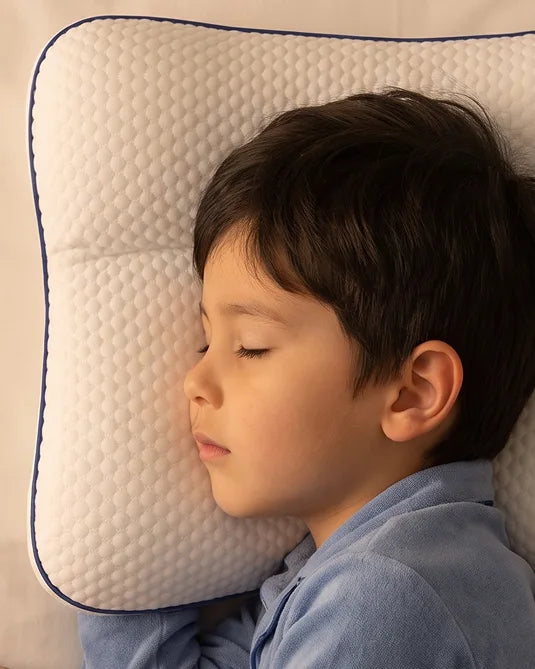
You look in on them at night, and their mouth is open again
Parents tell us they first notice it in small moments.
- A mouth hanging open on the baby monitor
- Snoring that sounds far too big for a small child
- A wet patch of drool on the pillow in the morning
- Waking up tired and grumpy after a full night in bed
If that sounds like your house, you're in good company: studies worldwide report mouth breathing in about 1 in 5 children (Gyra et al., 2025). There's usually a reason you can look into, and a few things you can start on tonight.

Causes of mouth breathing: it usually starts with the nose
Children breathe through the mouth at night when air can't get through the nose easily.
A blocked nose
Allergies, dust or a long run of colds can keep the nose swollen for weeks, so the mouth takes over at night.
Large adenoids or tonsils
They're common in young children and can leave less room for air. A pediatrician can check them in a few minutes.
Habit
Some children keep breathing through the mouth after the cause has cleared, even after adenoid surgery.
Why the pillow under their head matters
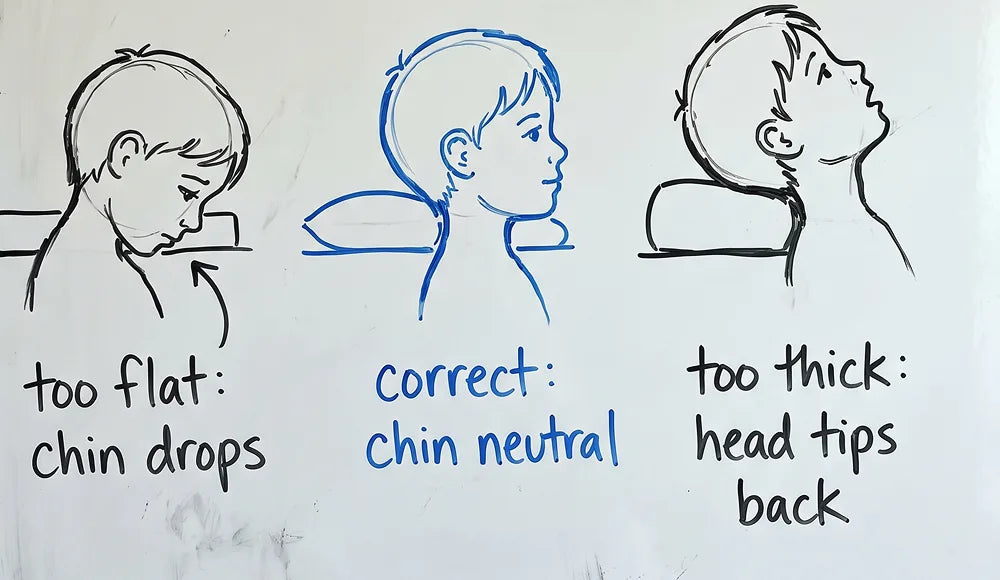
An adult pillow is built for adult shoulders, so under a small head it's too thick. A flat kids' pillow goes the other way and squashes down by midnight.
A pillow at the right height for their age lets the head rest in line with the neck all night. That's the easiest change on this page, and you can make it tonight.
A pillow won't clear a blocked nose. If the night check pointed to the nose or a doctor's visit, start there.
How to prevent mouth breathing at night: four things to try this week
Help the nose before bed
Ask your pediatrician whether saline spray or rinses suit your child.
Make the room easy to breathe in
Wash bedding hot every week, keep pets off the bed and keep the room cool.
Film two minutes of their sleep
An hour after they fall asleep, with the sound on. It shows a doctor exactly what you see.
Check what their head rests on
Swap an adult pillow for one sized for their age.
What parents tell us after the first few nights
4.8 from 2,340 reviews
- ★★★★★
“He actually smiles when he wakes up now. Mornings used to be rough and he was always tired. The pillow is comfy enough that he stays on it the whole night. Little man approved.”
Katie P. - ★★★★★
“Just a really comfortable, well made pillow. My son is a happier sleeper and that is all I was hoping for.”
Hannah W. - ★★★★★
“My son loves it. He calls it his cloud pillow and never wants to sleep without it.”
Heidi L. - ★★★★★
“My son loves this pillow and asks for it when we travel. Had to buy a second one.”
Vince S.
When to call your pediatrician
Book a visit if you notice any of these. A pillow is a comfort change; these need a doctor's eye.
- Loud snoring on most nights
- Gasping, choking or pauses in their breathing
- Mouth breathing that carries on for weeks between colds
- Tiredness, grumpiness or trouble focusing during the day
- Crowded teeth or a crossbite (start with your dentist)
Pediatricians are advised to ask about snoring at check-ups, so it's always fine to bring it up (Marcus et al., 2012).
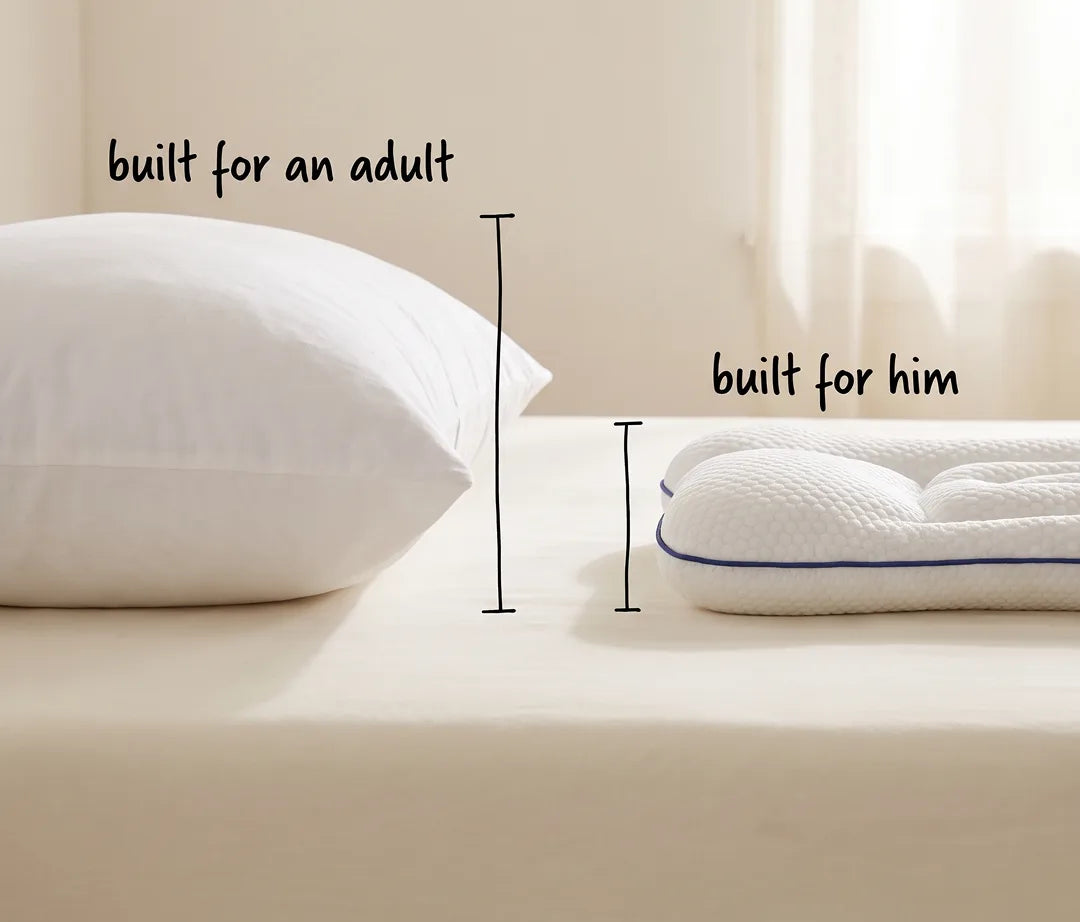
LittleBear Kids Posture Pillow
A pillow made for your child's size, with 90 nights to try it
Three heights, one for each age, with a soft contour that cradles the head and a raised edge under the neck. There's nothing to wear and nothing to practise; your child just lies down.
Pick your child's age
$59.99per pillow
See the pillow for ages 3 to 8About 16 cents a night over its first year. Siblings? Bundles of two or three save on every pillow.
- 90nights to try it at home
- 3heights matched to age
- 24hshipping on most orders
A regular pillow vs LittleBear
| Regular pillow | LittleBear | |
|---|---|---|
| Sized to your child's age | ||
| Three heights to choose from | ||
| Contoured centre and neck edge | ||
| Springy core that holds its shape | ||
| Breathable mesh sides | ||
| 90 nights to try it |
Questions parents ask us
Is mouth breathing bad for kids?
Now and then, with a cold, it's normal. When it happens most nights for weeks, it's worth finding out why, because research links it to poorer sleep and to how the teeth and jaws line up.
What are the effects of mouth breathing?
The ones parents notice first are snoring, restless sleep, a dry mouth and tired mornings. Mouth breathing effects studied in research also include gum problems and differences in the bite, though studies don't show it causes them.
Mouth breathing, teeth and face changes: is there a link?
If you've searched “mouth breathing teeth” or “mouth breathing face changes”, you've probably seen alarming photos. Research links mouth breathing in children with a narrower upper arch and crossbites, but hasn't shown which comes first. If you notice crowded teeth, ask your dentist to take a look.
What is the treatment for snoring and mouth breathing?
Snoring treatment and mouth breathing treatment depend on the cause. A pediatrician may treat allergies or a blocked nose, refer you to an ENT, or suggest a sleep study. A pillow is a comfort change, not a treatment.
How to sleep with mouth closed: should I tape my child's mouth?
We don't recommend it. A 2025 review found no good evidence that mouth taping helps and flagged a risk of harm when the nose is blocked (Rhee et al., 2025).
Which size should I choose?
Pick by age: 1 to 3, 3 to 8, or 8 and up. If your child is between sizes or tall for their age, size up. Not recommended for babies under 2.
Not sure where to start? Take the night check.
Sources
- Gyra GG, et al. Prevalence of oral deleterious habits among children: a systematic review and meta-analysis. J Oral Biol Craniofac Res. 2025;15(6):1539-1562.
- Marcus CL, et al. Diagnosis and management of childhood obstructive sleep apnea syndrome. Pediatrics. 2012;130(3):576-84.
- Rhee J, et al. Breaking social media fads and uncovering the safety and efficacy of mouth taping: a systematic review. PLoS One. 2025;20(5):e0323643.
This article is general information for parents and caregivers, not medical advice. If you're worried about your child's breathing or sleep, please talk to your pediatrician.